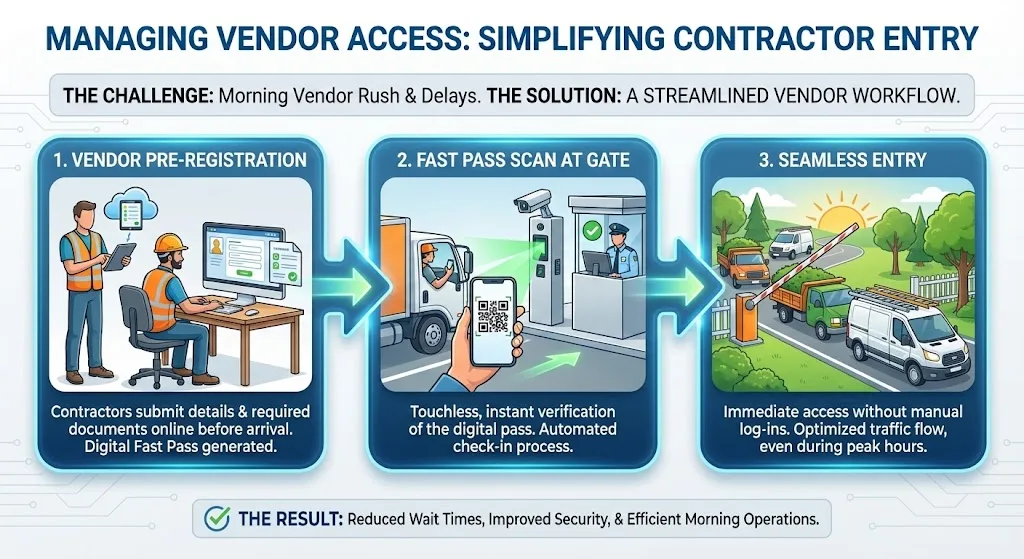
Managing contractor and vendor access in a Florida HOA isn't just a scheduling headache. It's a security risk, a liability issue, and on busy mornings, it can bring your gate to a complete standstill. If your community regularly deals with landscapers, pool technicians, and pest control crews all showing up between 7:00 and 9:00 AM, you already know what we're talking about.
Entrance IQ helps Florida HOAs take control of that morning rush with smart visitor management tools built specifically for gated communities. Call us at (561) 503-4500 to find out how we can help your property today.
Why Is Unmanaged Vendor Access a Security Risk?
Unmanaged vendor access creates gaps that compromise both physical security and resident trust. When a contractor walks through your gate without a logged entry, there's no record of who entered, when they arrived, or when they left. If something goes wrong, whether it's a theft, an injury, or a complaint from a resident, you have nothing to reference.
Florida HOAs also carry real legal exposure here. Without documented access logs, proving you followed reasonable security protocols becomes difficult. Communities in areas like Palm Beach Gardens and Boca Raton have faced resident disputes specifically because vendor entry records didn't exist or were incomplete. Most HOA insurance carriers now ask about access control documentation during policy reviews, and gaps in your records can affect your coverage terms.
Digital entry points carry their own risks too. Shared gate codes that never expire are a common problem. We've seen communities where a landscaping crew retained active gate access for six months after their contract ended. That's not a hypothetical; it happens more often than HOA boards realize.
What Are the Biggest Challenges During the Morning Contractor Rush?
The morning window between 7:00 AM and 9:30 AM is when most HOAs feel the pressure. Landscaping crews, maintenance workers, and delivery drivers all tend to arrive at the same time, and a single-lane gate with a manual check-in process can back traffic up quickly.
Guard-dependent check-ins average about 3 to 5 minutes per vehicle under normal conditions. During peak morning hours with five or more contractors queued up, that delay compounds fast. Residents trying to leave for work get stuck behind vendor vehicles. That creates frustration, and frustrated residents call the management office.
The fix isn't hiring more guards. It's building a system that pre-authorizes vendors before they arrive. When a visitor check-in app handles pre-registration, a contractor can pull up to the gate and be processed in under 30 seconds. That's a difference your residents will notice the very first morning it's in place.
How Do You Streamline Contractor Check-Ins Without Sacrificing Security?
Streamlining contractor check-ins comes down to three things: pre-authorization, time-limited credentials, and real-time logging. Set these up correctly and you get faster entry without loosening your security posture.
Here's what a solid contractor check-in process looks like in practice:
- Pre-register vendors before arrival. Your property manager or HOA board enters the vendor's details, work window, and authorized entry days into the system ahead of time.
- Issue temporary credentials with expiration windows. A landscaping crew that works Tuesdays from 7:00 AM to 11:00 AM should only have access during those exact hours. Not evenings. Not weekends.
- Log every entry and exit automatically. When the vendor checks in through a visitor check-in app, the timestamp, vehicle details, and personnel information are all captured without any manual input from your gate staff.
- Send real-time alerts for unscheduled arrivals. If a contractor shows up on a day they're not authorized, your team gets notified immediately.
This kind of structure reduces gate processing time by as much as 60% compared to manual check-in systems, based on what we typically see when communities upgrade from paper-based logs.
What Technology Makes Vendor Access Easier to Manage?
Modern access control platforms do the heavy lifting your front gate staff shouldn't have to handle manually. A good visitor check-in app gives you automated temporary credential generation, full audit trails, mobile notifications, and integration with your existing gate hardware.
Entrance IQ's visitor management platform was built specifically for gated communities and HOAs. It handles the entire contractor lifecycle: pre-registration, time-limited access codes, automatic expiration, and detailed entry and exit logs. Your property manager can pull a full vendor access report in minutes, not hours.
Audit trails matter more than most HOA boards initially think. If a resident reports a problem that occurred during a contractor's visit, you need to show exactly who was on the property, when they arrived, and when they left. A paper sign-in sheet doesn't hold up. A digital log with timestamps does.
For communities managing 10 or more regular vendors, expect to save between 5 and 8 hours of administrative time per week once a digital system is in place. That's time your property manager can put toward resident communications, maintenance coordination, and board reporting.
Does Florida Have Specific Rules for Contractor Access in HOA Communities?
Florida has several requirements that directly affect how HOAs manage vendor access, and they're worth knowing before your next board meeting.
Florida Statute 720 governs HOA operations and includes provisions around community security and record-keeping. HOAs are required to maintain certain records that are accessible to residents, and access logs for vendors can fall under this requirement depending on how your governing documents are written.
Florida Building Code also requires that licensed contractors working on properties carry proper documentation. Your gate staff shouldn't be verifying licenses manually at the entry point, but your pre-registration process should capture license numbers and expiration dates before a contractor is ever approved for access.
Communities near the Intracoastal Waterway in Palm Beach County or in high-density areas like Deerfield Beach often have additional local ordinances around contractor work hours, noise restrictions, and vehicle staging. Build those rules into your vendor access approval workflow so your gate team doesn't have to make judgment calls on the fly.
Ready to Fix Your Vendor Access Process?
Messy contractor entry doesn't just create security gaps. It frustrates residents, increases administrative workload, and puts your HOA in a difficult position if something goes wrong on the property.
A structured visitor check-in app with automated credentials, real-time alerts, and complete audit trails removes most of that friction. Your gate runs faster. Your records stay clean. Your residents notice the difference.
Entrance IQ works with HOAs across Florida to build access control systems that actually fit how your community operates. Call us at (561) 503-4500 to schedule a free consultation. We'll walk through your current vendor process and show you exactly where the gaps are.