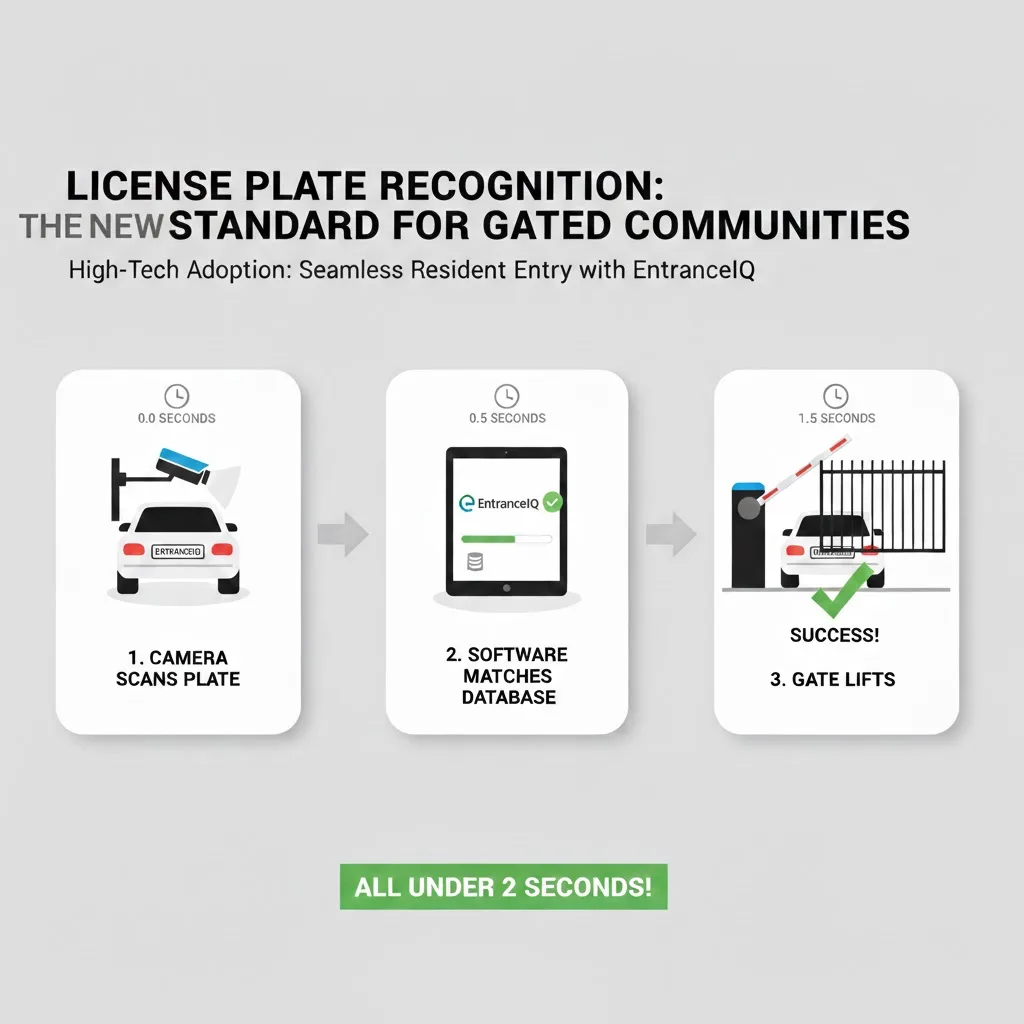
Florida's gated communities are moving fast. Key fobs and entry codes are giving way to license plate recognition (LPR) technology, and condo associations across South Florida are taking notice. If your community is still relying on outdated hardware, contact Entrance IQ at (561) 503-4500 to find out how fast an upgrade can happen.
LPR works by automatically reading a vehicle's license plate and granting or denying access in under two seconds, no action required from the driver. The technology pairs directly with security gate software like EntranceIQ to create a fully managed, cloud-based access system. Gate logs update in real time. Visitor records stay organized. And residents move through the gate without fumbling for a fob or punching in a code.
Why Are Florida Communities Replacing Key Fobs with LPR?
Key fobs fail. They get lost, shared with unauthorized guests, or simply stop working in Florida's heat and humidity. Communities like those near Mizner Park in Boca Raton or the condo corridors along A1A in Delray Beach manage high volumes of seasonal residents, short-term guests, and service vehicles. A fob-based system can't keep up with that volume without creating security gaps.
LPR eliminates those gaps. Each plate read creates a timestamped log entry tied to a specific vehicle and resident profile. There's no physical credential to lose or duplicate. Our team regularly sees communities cut unauthorized entry incidents by 40% or more within the first 90 days of switching to an LPR-based setup.
What Does Security Gate Software Actually Do?
Good security gate software does more than open and close a gate. When paired with LPR, it becomes the operating system for your entire entry process.
With EntranceIQ's visitor management platform, residents can pre-register guests from their phones, approve or deny entry remotely, and review access logs at any time. Property managers get a full dashboard showing gate activity, visitor history, and any flagged events. Security personnel spend less time manually verifying guests and more time on active patrol.
The practical result: entry processing time drops from an average of 45-60 seconds per vehicle with a staffed gate to under 5 seconds with LPR automation.
How Does LPR Handle Florida's Seasonal Traffic Spikes?
Florida communities don't run at the same pace year-round. South Florida properties near golf courses, beaches, and retirement communities see their populations double between November and April. That seasonal surge puts real pressure on gate infrastructure.
LPR handles it without adding staff or hardware. The system processes the same number of plates at 7 AM on a quiet Tuesday in August as it does on a peak winter Saturday afternoon. Temporary visitor plates get pre-loaded by residents ahead of arrival, so snowbirds returning to their Palm Beach County condos clear the gate without stopping.
For communities that currently staff a guard booth during peak hours, LPR can reduce guard hours by 50-70%, which often translates to $18,000-$35,000 in annual labor savings depending on community size.
Does LPR Work in Florida's Rain and Heat?
Yes. LPR cameras rated for outdoor use in Florida handle the rain, humidity, and direct sun that would damage lower-grade equipment. Quality units operate reliably between -40°F and 140°F, and the infrared lighting built into most commercial LPR cameras means plate reads stay accurate at night and during heavy afternoon downpours, which are a daily reality from June through September.
Proper mounting matters too. Cameras installed at the correct angle (typically 30 degrees or less from horizontal) and height (3-4 feet above the roadway) maintain read accuracy above 95% even in poor conditions. That's a detail that often gets missed in DIY installations.
What Are Florida's Privacy Rules Around LPR Data?
Florida doesn't currently have a statewide law that specifically bans LPR use by private communities, but data handling still matters. Your community's HOA or condo association documents may include provisions about resident surveillance and data retention. Most communities set plate data retention policies between 30 and 90 days.
EntranceIQ's security gate software stores access data on a geographically redundant platform with role-based access controls, meaning only authorized administrators can pull historical gate logs. That matters when a resident or board member asks who entered the property on a specific date.
Review your community's governing documents before deployment. A 15-minute review with your association attorney typically costs $150-$300 and confirms you're set up correctly from the start.
Future-Proof Your Community's Entry System
LPR isn't a trend. It's where gate access is going, and the communities that install it now spend less money over time. Modern LPR cameras carry 3-5 year hardware warranties, and cloud-based security gate software eliminates the expensive on-site server replacements that older systems required every 5-7 years.
The upgrade path is straightforward with EntranceIQ. The platform integrates with existing gate hardware in most cases, so communities don't always need to replace the gate mechanism itself. Onboarding is guided, and residents typically need less than 10 minutes to set up their profile and register their vehicle plates.
Communities across South Florida are finding that a modern visitor management setup pays for itself within 18-24 months when you factor in reduced guard labor, lower hardware maintenance costs, and fewer security incidents.
Ready to Upgrade Your Gate Access?
If your condo association is ready to replace aging fobs and outdated entry systems with LPR technology, Entrance IQ can walk you through the options. Call (561) 503-4500 to schedule a free consultation and find out what a modern security gate software setup looks like for your specific community.