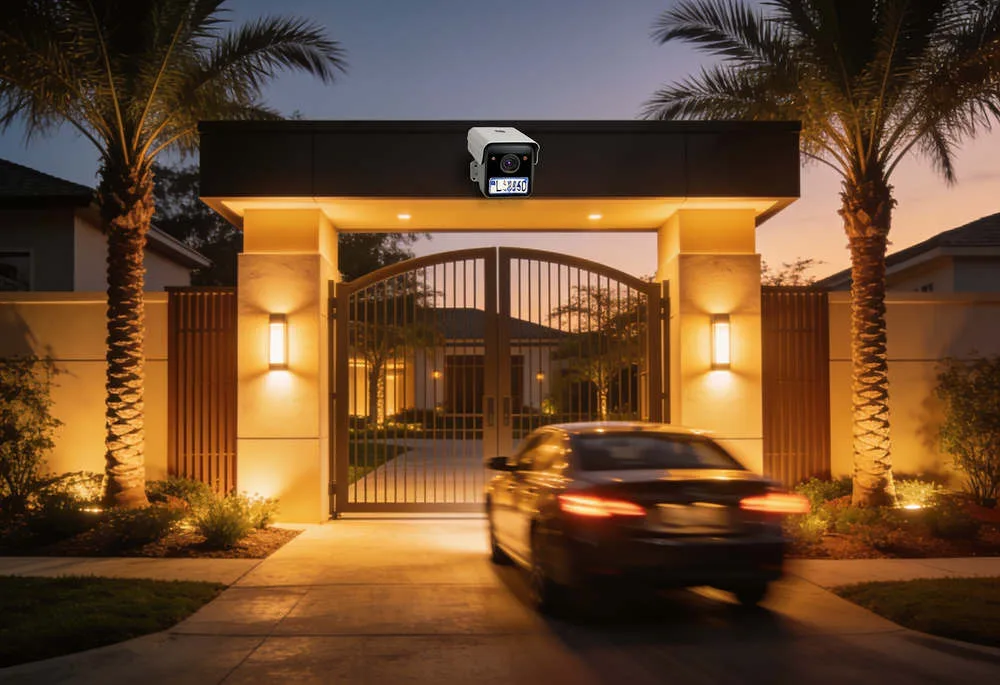
For most HOAs focused on security and accountability, license plate recognition is better than gate remotes because it ties access to a vehicle, opens the gate hands-free, and automatically creates a record of each entry. Remotes and RFID still have valid uses, especially as backups, but they offer less control once a credential is shared, lost, or transferred.
For HOA boards evaluating a gate upgrade, contact Entrance IQ for a walkthrough or call (561) 503-4500. Communities across the US are moving toward automated plate recognition because boards increasingly need to know more than whether a gate opened. They need to know which vehicle entered, when it arrived, and what credential authorized access.
From large master-planned communities in Florida to gated neighborhoods around Scottsdale, access control has become a data question as much as a hardware question. Entrance IQ approaches the gate as one part of a larger security system, with digital intelligence providing the records that remotes alone cannot create.
The same issue appears in suburban communities around Atlanta, where HOAs may manage residents, contractors, delivery drivers, renters, and guests through a single entrance. A physical barrier can slow a vehicle down. Without reliable digital records behind it, though, the board may have little useful information after a security incident.
Gate remotes are simple, but hard to control
Remotes are familiar. A resident presses a button, the gate receives a signal, and access is granted. That simplicity explains why they remain common.
The problem starts after distribution.
A remote can be lost, loaned to another driver, left in a vehicle after a move, or passed between people without the HOA knowing who actually used it. Some types may also be vulnerable to unauthorized duplication. Even when administrators can deactivate a missing remote, someone has to report the problem first.
From an audit perspective, the credential identifies the remote. It does not necessarily identify the driver or vehicle using it.
That distinction matters after a theft, vandalism incident, or unauthorized entry. Knowing that "Remote 247" opened the gate at 2:14 a.m. may help, but it leaves another question unanswered: which vehicle actually entered?
RFID improves convenience but remains transferable
RFID tags can offer better control than traditional clicker-style remotes. Depending on the system, a reader detects the tag as the vehicle approaches and grants access without requiring the driver to press a button.
That is convenient. It also removes batteries and button presses from the resident experience in many installations.
Still, an RFID tag is a physical credential. It can be transferred from one vehicle to another unless the HOA has procedures and technology in place to prevent or detect that behavior. A resident may give a tag to someone else. A vehicle may be sold with the tag still attached. Administrative records can become outdated.
RFID works well in many communities, particularly as part of a hybrid setup. It can provide backup access for situations where license plate recognition is not practical, such as certain rental arrangements or temporary vehicle changes.
But it does not inherently verify the vehicle itself.
Why license plate recognition changes the security model
Cloud-based License Plate Recognition, commonly called LPR, uses cameras and software to read a vehicle's license plate as it approaches the entrance. If that plate is authorized, the system can open the gate automatically. No remote needs to be found. No tag has to be passed from one vehicle to another.
More important for HOA administrators, the system can log each entry automatically.
The credential is tied to the vehicle. That gives boards a clearer audit trail when reviewing an incident, investigating unauthorized access, or answering questions about when a particular vehicle entered the community.
Automated plate readers are already used across a large number of communities and properties. The market direction is clear: access systems are becoming more connected, searchable, and accountable. The goal is not merely to open a gate faster. It is to create useful information every time the gate opens.
A gate without digital intelligence has a serious blind spot
A steel gate looks secure. It creates a physical boundary and controls the entrance point. But if credentials can be passed around freely and entries cannot be traced to vehicles, that gate provides limited information when something goes wrong.
This is where cloud-based visitor management changes the equation.
Instead of treating resident access, guest entry, and visitor records as separate administrative problems, an HOA can manage them through a digital system built around accountability. The board gains a searchable record rather than relying on paper logs, unverified remotes, or someone's memory of who was expected that evening.
That record can be a deterrent. People behave differently when they know vehicle entry is logged and reviewable.
For HOA administrators, the operational benefit matters too. When a resident changes vehicles, moves away, or needs temporary access, cloud-based credential management can give authorized administrators more control over the access lifecycle.
Should an HOA eliminate remotes and RFID completely?
Not necessarily.
Many communities benefit from a hybrid credential strategy. LPR can serve as the primary access method for permanent residents, while a keypad or RFID system remains available for rentals, temporary vehicles, maintenance needs, or other exceptions.
The right configuration depends on the property. A small gated neighborhood with one entrance has different requirements from a large community with multiple gates, frequent contractors, and a high volume of visitors.
Boards should ask practical questions before choosing a system:
Which credential identifies the actual vehicle rather than just a transferable device?
How quickly can access be revoked?
Does the system automatically create an entry record that administrators can search later?
What happens when a resident gets a rental car or changes plates?
Can the existing gate equipment be upgraded without replacing every physical component?
Those answers usually reveal whether the current gate is functioning as a true access control system or simply as a barrier with a button.
Choosing the right gate credential for 2026
Remotes remain easy to understand, but their transferability creates an accountability gap. RFID can improve hands-free access and administrative control, yet the credential can still move between vehicles. LPR ties authorization directly to the license plate and automatically documents entry, which gives security-focused boards a stronger audit trail.
For many HOAs, the most practical answer is not choosing one credential and discarding everything else. It is making LPR and cloud-based visitor tracking the intelligence layer behind the gate, then keeping another credential method for legitimate exceptions.
To see how your existing gate can support a more accountable credential system, schedule an upgrade walkthrough with Entrance IQ or call (561) 503-4500.