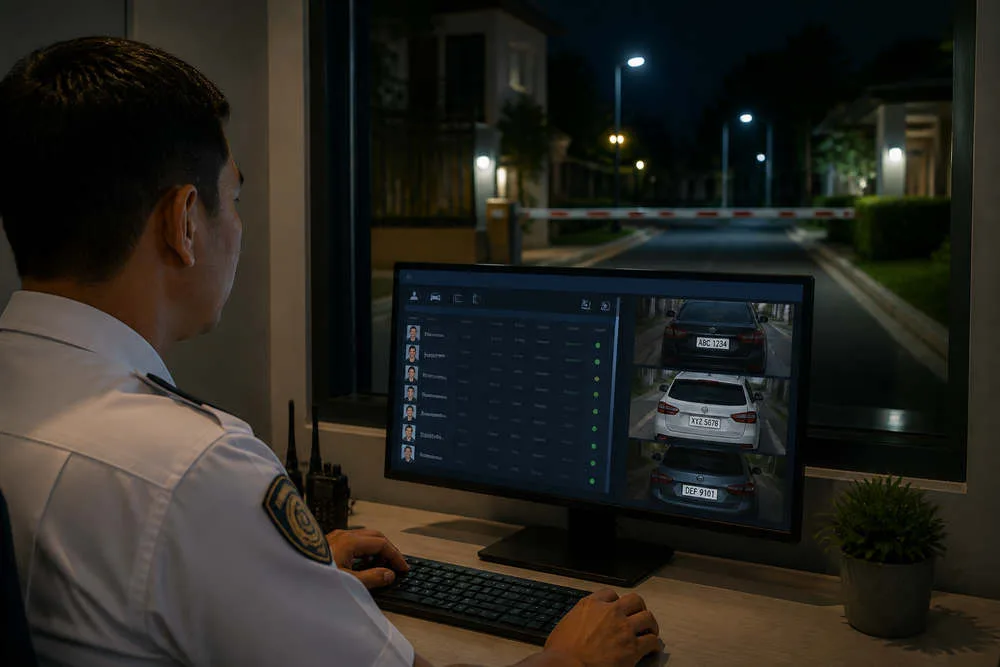
Gated communities can reduce crime at the gate by documenting who enters, when they arrive, and which vehicle they use. A physical barrier or camera may slow unauthorized access, but digital visitor tracking creates accountability. For communities across Florida, that distinction can determine whether a board has usable evidence after an incident or simply footage of an unknown vehicle.
Boards concerned about theft, vandalism, or repeated unauthorized entry can contact Entrance IQ for an access-control walkthrough or call (561) 503-4500. In gated communities around Scottsdale, the security question is no longer limited to whether a gate closes properly. Boards also need to know whether the system can identify and document the vehicles passing through it.
The same problem affects large residential communities around Atlanta, where residents, guests, contractors, delivery drivers, and service providers may enter throughout the day. Entrance IQ adds a digital accountability layer to existing gate infrastructure, giving administrators access to information that a physical barrier alone cannot provide.
A gate is a barrier, not an investigation tool
A gate can restrict vehicle movement. A camera can record what happens. Neither one automatically tells an HOA board whether a vehicle was authorized, who approved the visit, or how often the same plate has entered the property.
That gap becomes obvious after an incident.
Suppose a resident reports property theft overnight. Traditional camera footage might show a vehicle entering at a certain time, assuming the camera captured a usable image. Board members or property managers may then have to search through hours of video and compare incomplete information against visitor records.
Digital visitor tracking changes the starting point. Instead of asking, "What happened at the gate last night?" administrators can search documented entries by time, vehicle, or other available criteria.
The difference is practical. One system records activity. The other makes that activity searchable.
Why accountability can deter unauthorized entry
People tend to make different decisions when they know their actions are documented and can be traced. That principle is central to modern gated-community security.
General industry findings associate monitored and documented access with reductions in unauthorized entry and property crime. Results vary by community, location, system design, enforcement practices, and other conditions, so no responsible provider should promise a guaranteed crime reduction figure.
Still, the security logic is straightforward. A person considering unauthorized access faces a different risk when the community can document the vehicle, record the entry time, and preserve that information for later review.
This is where cloud-based visitor management becomes more than an administrative convenience. It gives the gate a memory.
License plate recognition connects access to the vehicle
Traditional gate credentials often identify a device rather than the vehicle using it. A remote can be lost or passed to someone else. A code can be shared. Once that happens, the HOA may know that a valid credential opened the gate without knowing who actually drove through.
License Plate Recognition, commonly called LPR, approaches access differently. The system captures the vehicle's plate as it arrives and can automatically create an entry record.
For HOA boards, that provides a stronger audit trail. If an incident occurs, administrators can review which vehicles entered during the relevant period rather than relying entirely on memory, handwritten logs, or hours of unorganized footage.
LPR does not eliminate every security risk. No technology does. Tailgating can still happen, plates can sometimes be obscured, and communities still need sensible operating procedures. But automatic plate capture gives administrators a much clearer record of vehicle activity at the entrance.
Pre-authorized guest passes reduce guesswork at the gate
Guest access often creates one of the largest holes in a gated community's security process.
Residents may call in visitors. Guards may receive handwritten lists. Permanent gate codes get shared with relatives, contractors, cleaners, and delivery drivers. Over time, a community can lose track of who has access and why.
Pre-authorized guest passes create a cleaner process. A resident approves a visitor before arrival, and the system has a record of that authorization. The visitor can then be processed according to the community's access rules without relying on an unverified explanation at the gate.
This also helps reduce the pressure that contributes to tailgating. When legitimate guests have a clear path through the entrance, there is less incentive to follow another vehicle closely or wait for someone else to open the gate.
For boards, pre-authorization also answers a basic question after an incident: Was this person expected?
Searchable entry logs matter after something goes wrong
Security systems are often judged by what they prevent. Boards should also consider how useful those systems are when prevention fails.
After theft, vandalism, or another property crime, time matters. A searchable entry log can help administrators narrow the relevant period, identify vehicle records, and preserve documentation that may assist law enforcement.
Compare that with a gate that only opens and closes.
The physical equipment may have worked perfectly. The barrier lifted when it received a credential and closed afterward. Yet if the community cannot determine which vehicle entered, who authorized it, or when the same vehicle previously visited, the gate offers little investigative value.
Automatic documentation turns access events into records that can be reviewed rather than reconstructed from memory.
The strongest upgrade may be behind the existing gate
Many HOA boards assume better security requires replacing the entire entrance. That is not always the case.
The larger weakness may be the lack of intelligence behind existing equipment. A functioning gate can often become more accountable when paired with digital visitor tracking, LPR capture, and searchable access records.
Boards evaluating how their HOA can reduce crime at the gate should look beyond the physical barrier. Ask what happens to the information after a vehicle enters. Can administrators find the record quickly? Can they verify authorization? Can they provide useful documentation after an incident?
If recent incidents have raised those questions in your community, schedule a walkthrough with Entrance IQ to review your current gate setup or call (561) 503-4500.