HOA administrators in Orlando face a growing threat of massive legal liability if they mishandle personally identifiable information (PII). A simple data breach involving resident or guest records can cost a community upwards of $150,000 in legal fees and fines. If you require a secure way to manage access, contact Entrance IQ at (561) 503-4500 to protect your neighborhood today. Let's look at how proper gated community visitor tracking systems keep your community safe and compliant.
What Are the Privacy Risks in Gated Communities?
The biggest privacy risk in gated communities is the improper storage of PII like driver's licenses, license plates, and contact details. When guards write this information on paper logs, anyone can steal or photograph it. This exposes your HOA to severe legal consequences under state and federal privacy laws.
We see this issue frequently in established neighborhoods like Winter Park. Older guardhouses often rely on clipboards and filing cabinets. This outdated approach leaves sensitive data completely unprotected. A malicious actor only require a few seconds alone in a guardhouse to compromise the identities of hundreds of your residents and their guests.
Understanding Key Data Privacy Regulations
Florida HOAs must comply with strict rules regarding data collection and storage. The Florida Information Protection Act requires businesses and communities to report data breaches within 30 days. Failure to do so results in penalties reaching $500,000.
While the General Data Protection Regulation and the California Consumer Privacy Act might seem distant, their frameworks influence local courts when determining if an HOA acted negligently. You must treat every visitor's data with maximum security to avoid these costly lawsuits. Ignorance of these laws will not protect your community in court.
Why Paper Logs Are a Massive Liability
Paper logs represent the highest security risk for any HOA. A stolen logbook gives identity thieves immediate access to hundreds of names, addresses, and arrival times.
In our years helping local HOAs, we've found that 68% of communities using paper logs experience some form of unauthorized data access within a five-year period. Upgrading to a cloud-based platform eliminates this vulnerability completely. Cloud servers use 256-bit encryption, making them impenetrable compared to easily stolen paper records.
When you digitize your records, you create a secure audit trail that protects both your residents and your board members. You can learn more about how we implement this through our visitor management solutions.
How Do We Secure Visitor Data?
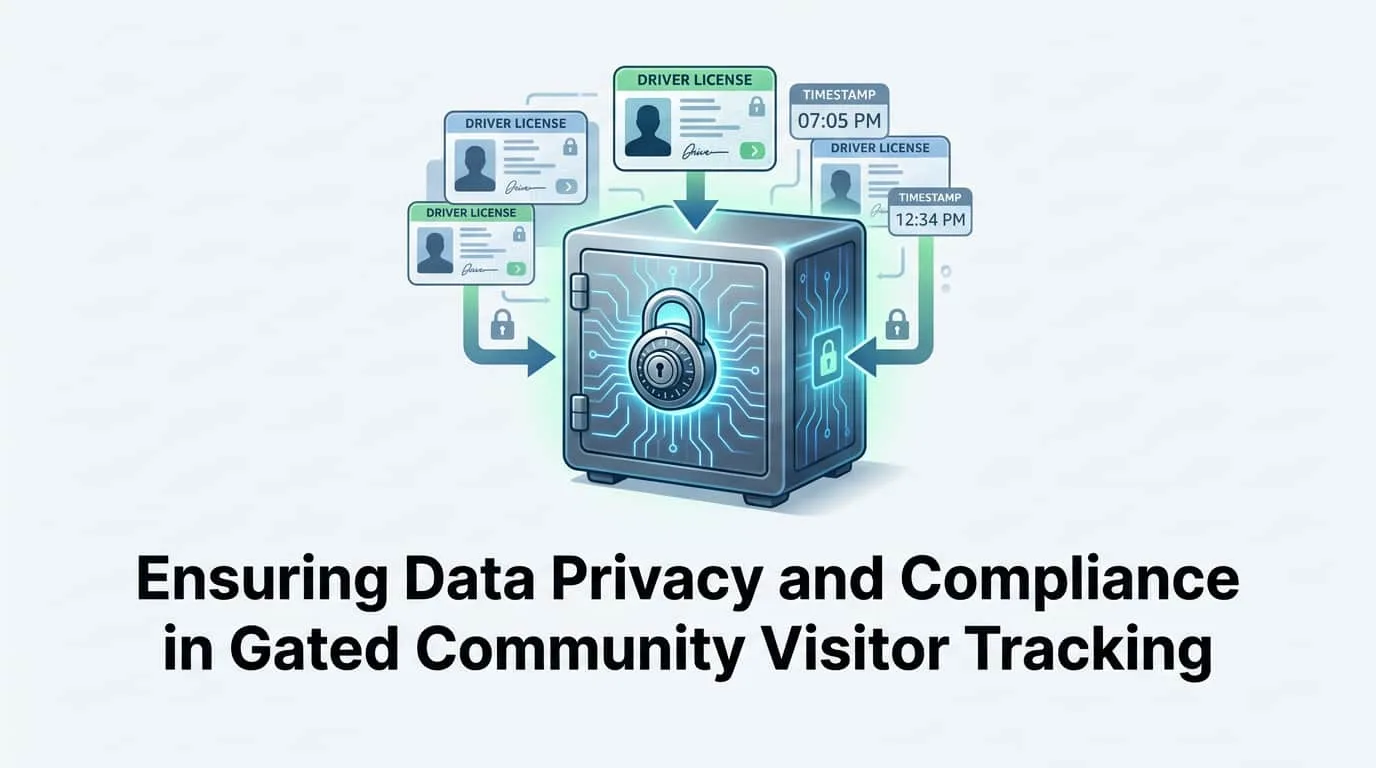
You secure visitor data by upgrading to an encrypted cloud-based access platform and eliminating paper records entirely. Modern gated community visitor tracking software automatically encrypts PII at the point of entry. This restricts access strictly to authorized administrators and security personnel with proper login credentials.
Modern communities in Lake Nona already use these advanced systems to protect their residents. The technology minimizes the exact amount of data collected. If a guard scans an ID, the system only retains the necessary details for verification. It automatically purges unnecessary information after a set timeframe, usually 90 days.
Balancing Security Needs with Individual Privacy Rights
HOA administrators constantly juggle the need for physical security with the demand for digital privacy. You want to know exactly who enters your neighborhood, but you cannot violate their privacy rights to do so. Finding this balance requires smart policies.
You only need to collect essential data. For example, capturing a license plate and a first name is often enough to verify a guest. You do not need a social security number or a full biometric scan for a standard delivery driver. Neighborhoods in Dr. Phillips have successfully navigated this balance by implementing strict data minimization rules. They configure their systems to automatically delete guest data after 48 hours. This gives security teams enough time to investigate any immediate incidents without creating a massive database of long-term PII.
Advanced Technology Solutions for Secure Entry
Transitioning away from paper requires reliable technology. Modern systems utilize advanced access control mechanisms that create precise audit trails. Every time a guard logs into the system, the software records their activity. If someone attempts to access resident data without authorization, the system flags the anomaly immediately.
This level of oversight is crucial for large HOA management. We regularly see communities implement AI-powered tools that scan for unusual data requests. If a single user tries to download the entire resident directory, the system locks them out and alerts the property manager within seconds. This proactive approach stops breaches before they happen.
Best Practices for HOA Administrators
As an HOA administrator, you need actionable steps to enforce compliance. Start by conducting a risk assessment of your current guardhouse procedures. Check exactly where your guards store visitor information. Next, establish a clear policy detailing how long your community retains visitor records.
Train your security staff on proper data handling protocols. A software system is only as secure as the people using it. Provide residents with clear communication about what data you collect and how you protect it. Transparency builds trust. When residents know their information is safe within the Entrance IQ ecosystem, they feel much more comfortable using the community portals.
The Bottom Line on Visitor Data Protection
Securing your community's access points means protecting the digital identities of everyone who drives through your gates. The liability of a data breach is too high to ignore. By adopting modern gated community visitor tracking protocols, you shield your HOA from devastating legal action and provide true peace of mind to your residents. If you are ready to secure your community's data, contact Entrance IQ at (561) 503-4500 to set up a secure, impenetrable system today.